
How can I get my kid to skate faster?
It's late in the off-season and I've noticed a lot of hockey parents reaching out online, usually in Facebook groups, where they're mercilessly ridiculed and fed terrible information from internet trolls, err, flat brim wearing dads who only care about goals.
I really can't grasp the thought process of those guys who travel from one end to the other with each period. In mites, sure, get a front row seat to your kid scoring a goal.
At bantam and up, though? Still?
You're putting a spotlight on yourself...a figurative big arrow over your head that showcases you have no idea what you're watching.
Maybe that's just me. (It isn't.)
Anyway, one of the more common requests I've seen is regarding making their kid a faster skater, usually a mite, squirt, or peewee parent...
And the power skating advocates come sweeping in real quick...
Or the self-proclaimed skate sharpening experts start doling out junk advice -- switch to a 3/8ths hollow with this custom radius profile.
Or they're just flatly told, "Your kid sucks...deal with it."
Comments like that are always so helpful, right?
Here's my take on it...and I'm gonna address the power skating, the sharpening, and the ACTUAL thing that allowed my kids to get past the "you need to be faster" phase.
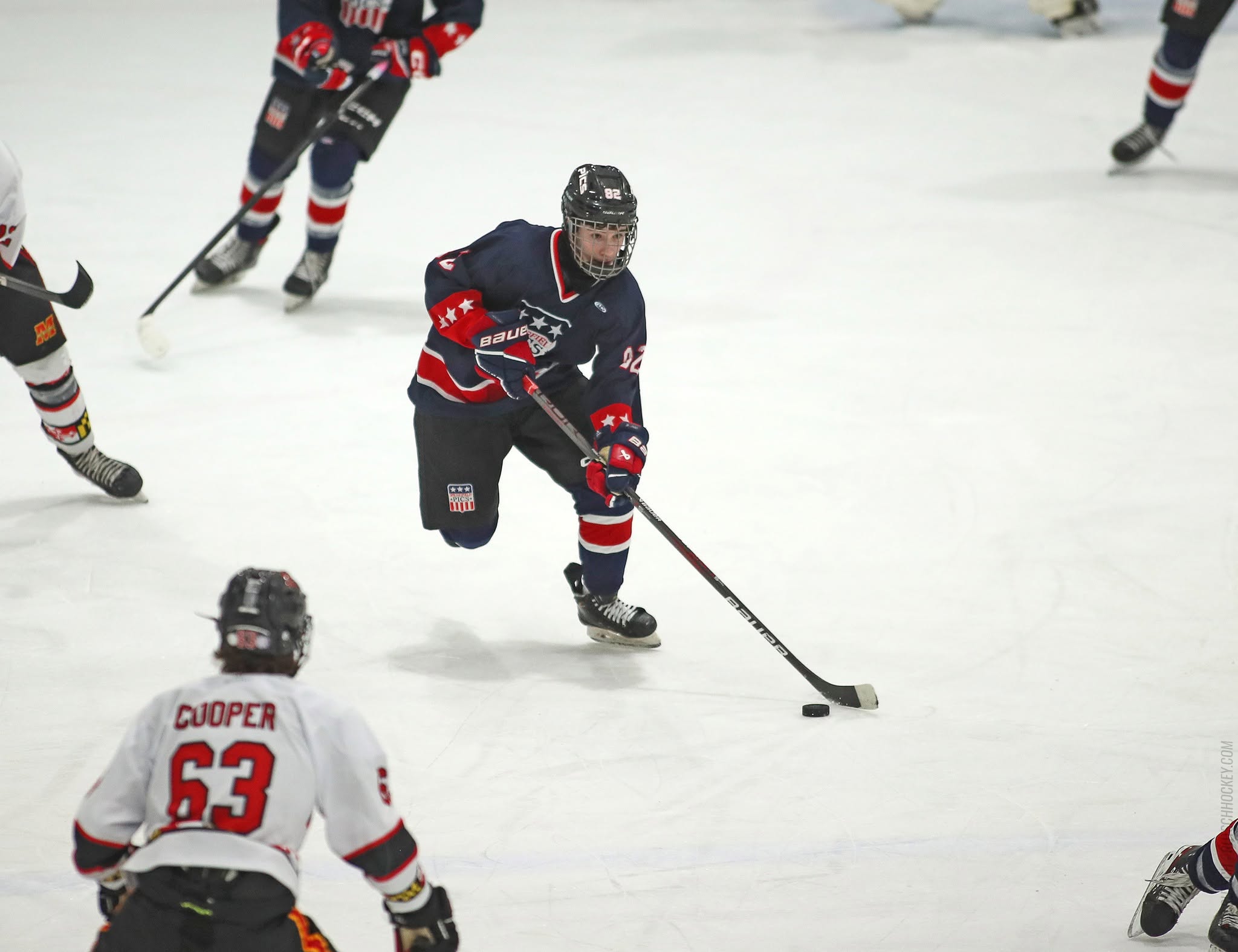
So, my oldest son, Duncan, was usually one of the slowest skaters on his team.
The usual excuse was that he was younger than everyone else and I kinda went with that for a little bit...but as it started to become routine that he was finishing up the skating drills alongside the goalies, well, there was more to it.
Main issue was that he very clearly favored one leg -- there was zero push with his left leg.
Went to a VERY expensive power skating coach and he said, "He doesn't use his left leg."
Thanks, Captain Obvious.
Now I'm not going to shoot down the advice to seek out a power skating coach but you need to be fully aware that your kid will only get out of it what they put in.
If they bend their knees and push all the way back with every stride with the skating coach barking at them...but then just go back to their regular stride for practices and games, you're just paying for that skating coach's Maserati in the parking lot...not making your kid a better skater.
Yeah, I said it.
So, instead, I went the cheap method and reminded him to push all the way back...with BOTH legs relentlessly on every drive to the rink. Both legs. Push all the way back...and then I'd do some exaggerated goofy pose for him before he stepped on the ice.
Kinda worked, the stride became a little more even...but his speed didn't really increase.
Really good skater, could do all of the fancy transitions and pivots and stops -- he had amazing mite and squirt coaches -- but in a race for the puck...he wasn't winning against even the kids that just "run" on the ice at that age.
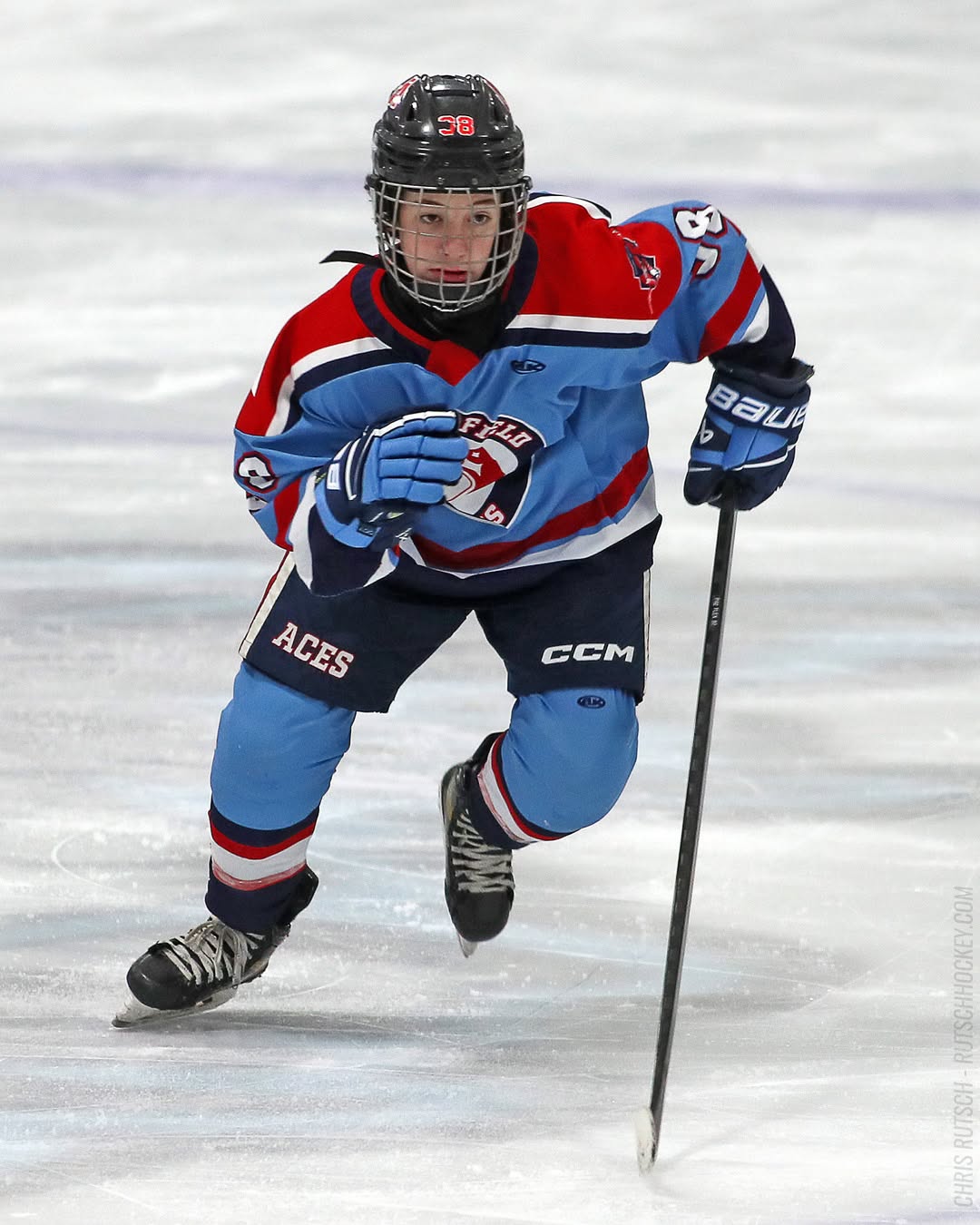
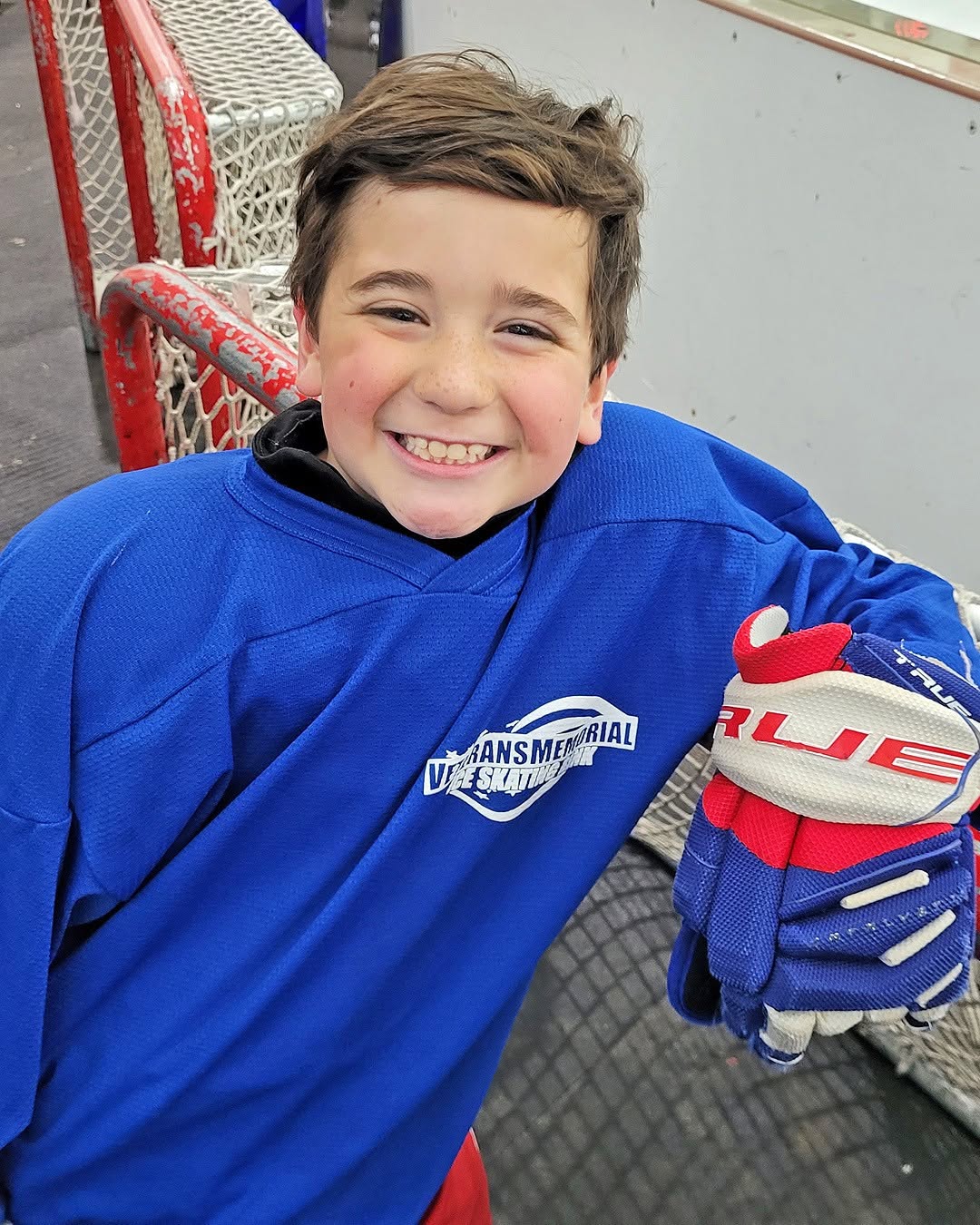
My middle son, Henrik, always had a stride that looked like a hockey player. A little bowlegged, kinda like he was riding a horse, and he'd really drive into the ice. That's him up top in the light blue uniform.
There was a brief moment where he got a little stompy -- driving DOWN into the ice -- but that was easy to correct when I tricked him into thinking that you don't want people to hear you coming. Be sneaky.
He adjusted his stride a bit, more backward force than downward force, and boom, he wasn't back with the goalies in the skating drills... Instead, he was hanging with the pack and, occasionally, on the heels of the kids that skate like Ferraris.
My youngest, Emmet, well, he doesn't have the drive of his brothers right out of the gate. His stride is a little too upright, knee bend isn't great, foot speed is below average.
But you know what?
He's fast. More on that, later.
So I don't want to totally shut down the notion of going to a power skating coach to improve speed -- there is value outside of speed if your kid buys in to what they're being coached -- but it's not a magical solution to suddenly having blazing speed.
Regarding the skate sharpening, I've going to lead with the custom profiling that so many suggest.
A lot of gung-ho youth hockey parents have their kids' skates custom profiled for three reasons.
One, it sounds cool.
Two, professional players do it.
And, three, it's reported to make your kid skate faster.
The process involves grinding the "out of the box" blade down to create a "lean" or, an opposing variation, to give it more of a banana shape.
The lean is to promote the skater to lean forward and, as a result, push backward harder. Kinda like those drag racing cars where the back wheels are bigger...so the car leans forward.
Idea there is that it makes you faster...and it probably does.
Problem is -- it makes skating backwards exponentially more difficult...at a terrible time when it comes to skating development.
Flat-brim dads don't care about skating backwards, though.
Yeah, I said that out loud too.
The banana shaped profile is to customize the blade so as little of it is actually touching the ice as possible...they grind down both ends.
That's great for glide, far less friction -- science matters -- but awful for everything else unless you're already a strong skater.
I've seen thousands of mites, squirts, and peewees -- I can think of only one that could be classified as a truly "strong" skater worthy of a blade like that at such a young age.
He'll be at the next Olympics in ice dance. Quit hockey after his first mite season. Go Luke!
But, yeah, just think -- if your stride is awful...how is making your contact point with the ice even smaller going to make you faster?
Ding, ding, ding!
It's not.
Further, while professional hockey players have equipment guys who are able to replicate their preferred "custom" profile with precision...you do not.
I think we can all agree that the need for new skates at the youth levels ALWAYS comes at the least opportune times -- three hours from home between games at a tournament. That's how it always happens.
By having your son or daughter "accustomed" to skating in "stock" blades, they'll have about a 15 minute adjustment period to get used to their new skates.
If you custom profiled the last pair, they're gonna feel "wrong" all weekend.
And *still* wrong when you get some yahoo to attempt to profile them like the old pair.
All I'm saying is that it's a bad idea.
It's not a solution to anything...and comes with a long list of drawbacks...that you're bringing on yourself.
Sorry...I know that's not the "cool" thing to say.
Now to the actual sharpening.
I do think most folks online are genuinely trying to help when they post advice...but, from my experience, they're missing the mark.
The "sharpen" is called the radius. Most skaters start off with a 1/2" radius -- it's like the default.
It's what most kids start on...and what 85% of youth hockey players skate on.
Most, unknowingly.
And that's okay! This really getting down to the nitty-gritty, here.
Moving up from 1/2 inch to, say, 5/8th of an inch provides less bite, or grip, on the ice...but allows more glide.
Go all the way up to an inch, and it's like skating on dull skates for the average skater -- it's hard.
But, yeah, in theory...with less friction, you glide more, which makes you faster.
Except...unless you're really strong on your edges, it's hard to push off...with limited bite.
In most cases, the suggestions I see for increasing speed is to move that direction.
The opposite direction is to go under 1/2 inch...which provides more bite.
This would be for players who struggle to do hockey stops or lose their edge with regularity. Your skates literally "stick" the ice better.
Obviously, though, that's bad for speed.
So it's one of those things where the individual skater needs to find the right balance between grip and glide...and that'll always be based on how skilled of a skater they are. Not how fast...how skilled.
What I've done with my children is start them off at the 1/2 inch radius...and slyly move them upward as their skating and edgework improved.
And that's the secret -- NEVER tell your young kids something is different.
If they know something's different, they'll call it out and quit on you.
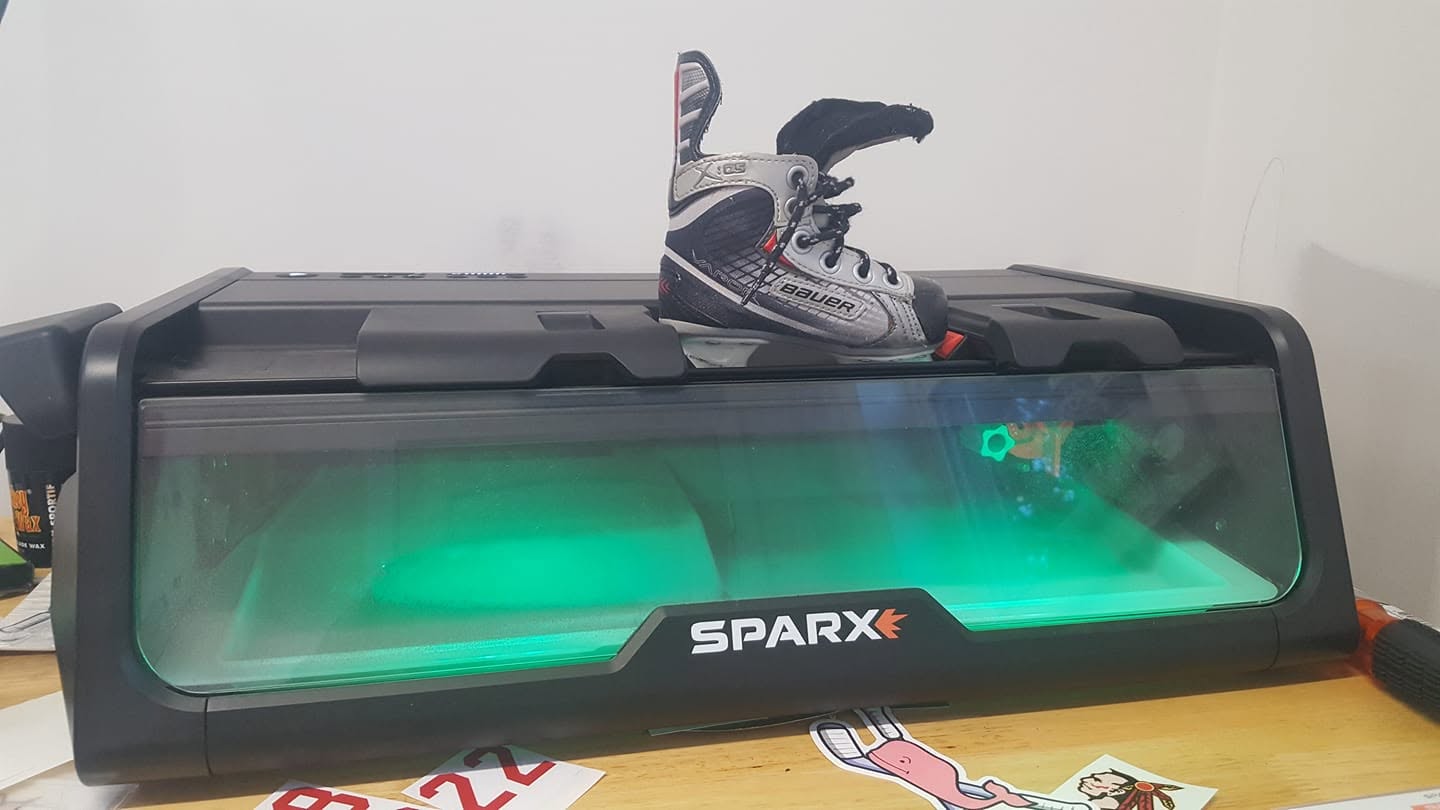
Today, they're all currently skating on a 3/4 radius and will likely all be at 7/8ths once my current Sparx wheel is exhausted.
But here's where everyone commenting is often missing the mark entirely.
Weight matters.
For a hockey player that weighs 50 pounds, giving them a skate blade with limited grip puts them at a HUGE disadvantage. You're making skating harder than it already is.
Honestly, if they're under 100 pounds and not an elite level skater, the radius on the blade doesn't make any difference at all.
My advice, stick with the 1/2inch standard until they're clearly "owning" the edges with confidence.
And if you have no idea what any of this is even about...stick to your routine.
This custom stuff doesn't offer the advantages people claim it does.
So where's the smoking gun?
I'll tell you.
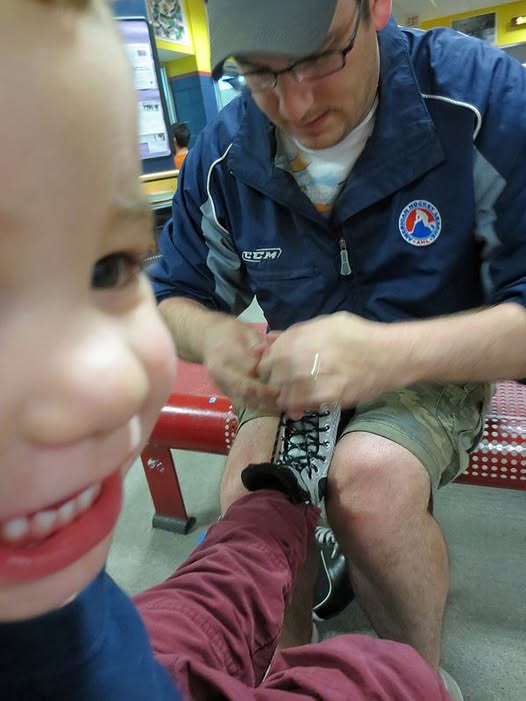
It's the skate size. Blade size, specifically.
My oldest has tiny feet.
My middle one has, what I'd consider, normal sized feet...
My youngest...has huge feet.
I had an inkling speed had everything to do with the length of the skate blade when my oldest when from a size 13 youth skate to a 1.5 size.
In Bauer skates, at the time, that was the largest jump in blade length across their entire line of skates.
Literally, overnight, he went from skating back with the goalies during drills to the front of the pack. Still not one of the leaders way out front...but surpassed like 8 guys...on day one.
Never noticed that with my middle son since his feet were always in-line with most of his teammates...but I did change the way we shopped for new skates each time he complained about hit feet hurting.
As for my younger son...he's got big feet. Regardless of his wonky and inefficient stride, he had the advantage built right in.
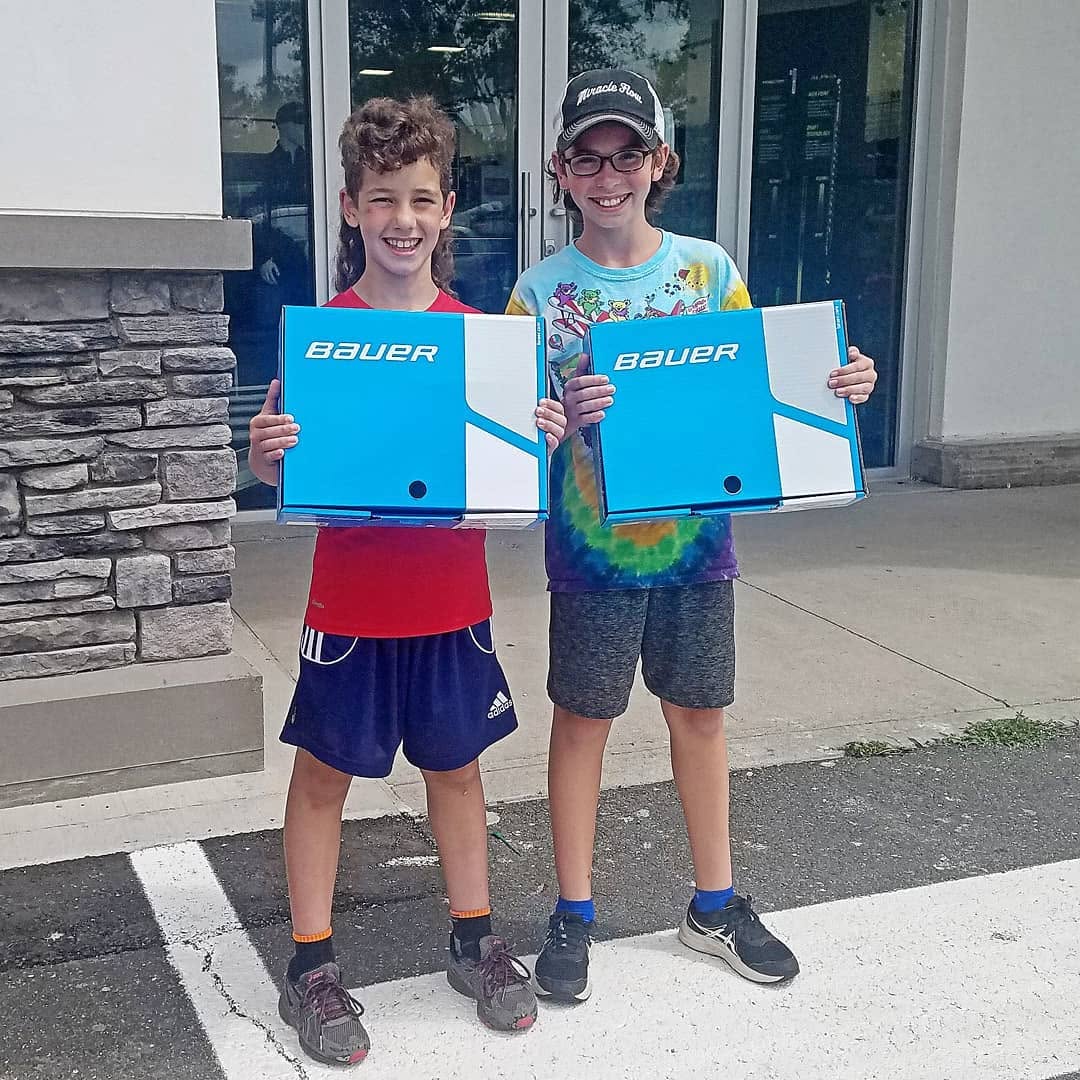
So, for us, it's no longer just going up half a size or a full size when their toes are getting smooshed...now I shop based on what the next blade length is.
The advantage it provides is that it gives the kids way MORE blade to push off with.
Turns out, my kids were never slow skaters -- they were like swimmers kicking with their feet against competition wearing flippers.
Overnight difference.
Not joking, OVERNIGHT!
A size 2 skate has a 221mm long blade. So does a size 2.5 skate.
Jumping to a size 3 skate has a 230mm long blade.
9mm doesn't sound like a lot...but bust out your metric ruler for a moment.
It's bigger than you think.
Jumping all the way to a size 4 skate has a 238mm long blade. That's almost an 8% gain. Instantly.
So I'm not suggesting you go out and buy your 6 year old adult skates and tell them to "figure it out"...but what I am saying is stay the course -- even if they seem slow at the early youth levels, they probably aren't.
As their feet grow, get the biggest blade you can where the boot will still stay on their foot.
If a 1/2 size larger has a longer blade, do it.
Not many players are outskating my oldest to a loose puck these days. And, from my perspective, he still only really utilizes one leg...but the speed is there.
His feet have grown to a point where he's not at a surface length "push" disadvantage.
There is one caveat, though.
It's like a diminishing return thing... Once you go beyond a size 8 or 9 skate...you've got flippers on.
Flippers are great in the water...not so much on the ice.
I've been in a bunch of pro hockey locker rooms -- you'd be shocked at how many of those guys are jamming their giant feet into size 8 skates.
It's like the sweet spot for speed and agility.
But...that shouldn't matter for any youth hockey player.
So, wrapping this up...here are my two cents.
Don't waste money on power skating unless you know your kid will absorb and actually use what they're being taught. Often it's an age/maturity thing...but you know your kid better than anyone. Don't fund some dude's Maserati for nothing. They'll rob you blind.
Don't ever custom profile your kid's skates. It won't serve them well.
Don't bother getting fancy with skate sharpening expecting some miraculous change. You'll do more harm than good.
But do shop for skates differently going forward.
Related Articles
» Refs Lost Control of the Game
» Getting a Sponsor / Becoming a Brand Ambassador
» Attainable Short Term Goals are a Path to Success
» The "Secret" Scrimmage
» Is Elite Hockey Cost Prohibitive?
» The Rink Experience - Universally Needed Rink Improvements
» Youth Hockey Road Map for New Hockey Parents
» Youth Hockey Nutrition, err, lack thereof
Agree? Disagree? Let me know -- I love the feedback from all angles!

Chris Rutsch
Hockey DadYear round, I spend a significant amount of time and money transporting my three boys to and from freezing cold ice rinks. Not because I expect them to make it to the NHL but because I know the rigorous youth hockey experience will serve them well in the future.